
How to Measure for Colonial Aluminum Shutters
Measuring instructions are written by ShutterLand, a U.S. exterior shutter specialist with over two decades of hands-on experience sizing for residential homes and commercial properties.
Colonial aluminum shutters can be installed using one of three different methods based on their intended use and function: hurricane impact-rated, decorative hinged, or decorative fixed. Each installation type has specific measuring requirements that determine the proper shutter dimensions, mounting location, and hardware selection.
Accurate measurements are essential for proper fit, operation, and installation. Carefully follow each step of this measuring guide and watch the instructional video before placing an order. The video provides additional guidance for measuring window openings, determining shutter dimensions, and accounting for installation clearances. Following the complete measuring process helps to ensure the shutters are properly sized for the selected application.
Step 1: Determine the Shutter Installation Type
Colonial aluminum shutters are available in three installation configurations. The selected configuration determines how measurements are entered when ordering.
Hurricane Impact-Rated Shutters
Hurricane-rated shutters are hinged panels designed to close over the window and provide impact protection when properly secured. They feature reinforced aluminum louvers and an approved locking system.
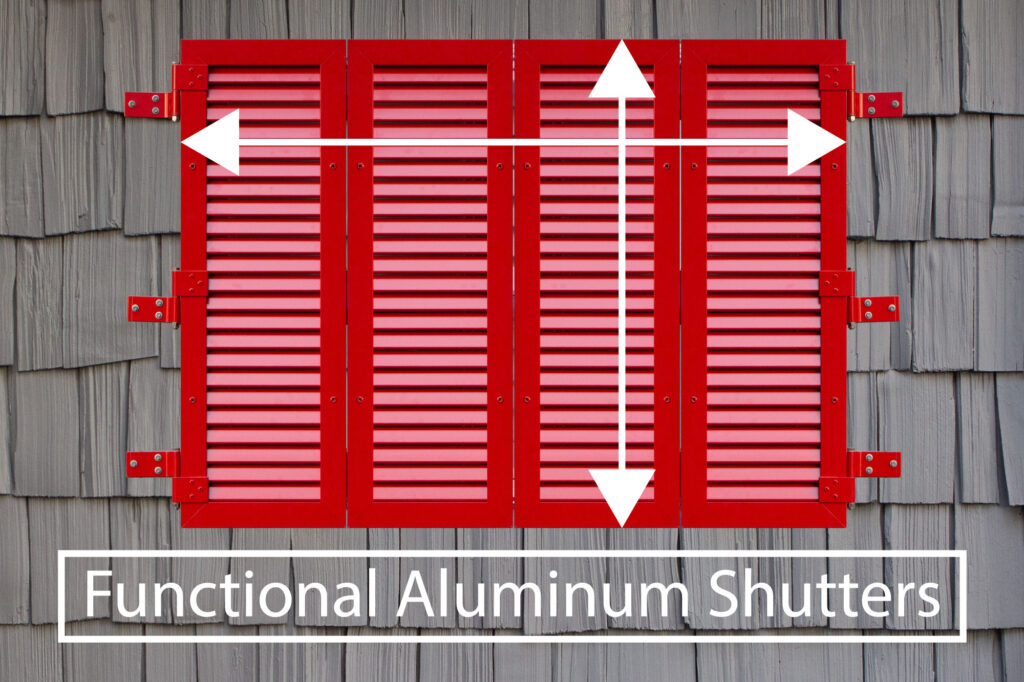
These shutters are ordered as complete units consisting of one, two, three, or four panels. The full unit width and height must be provided.
Decorative Hinged Shutters
Decorative hinged shutters open and close in the same manner as hurricane-rated shutters but use hollow aluminum louvers without internal impact reinforcement.
These shutters are also ordered as complete units using the overall width and height. Decorative shutters are not approved for hurricane protection.
Decorative Fixed Shutters
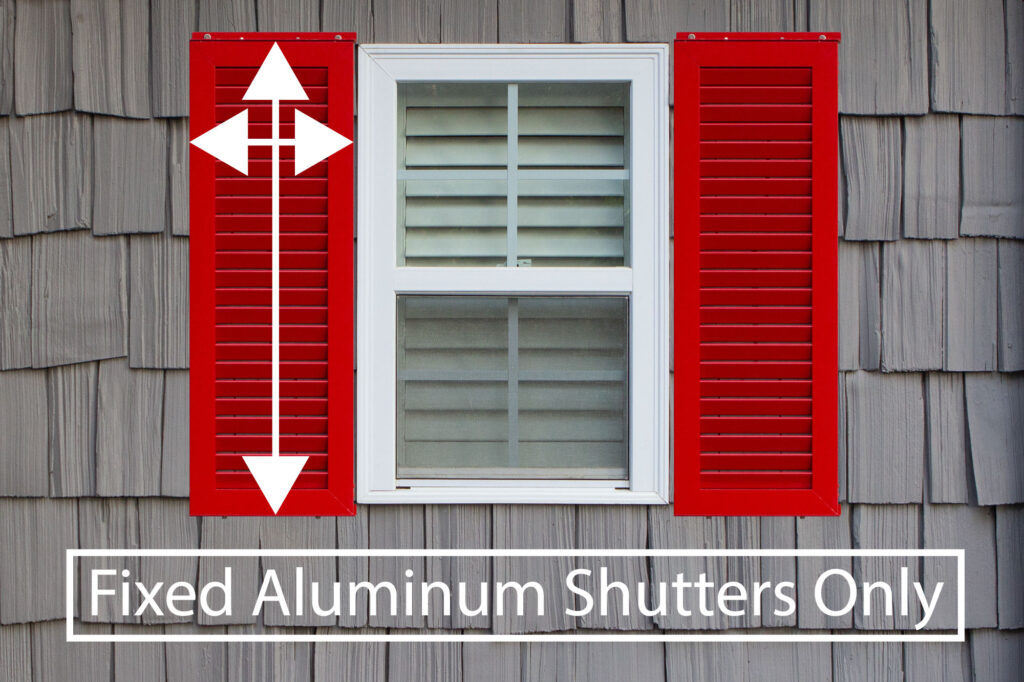
Fixed Colonial aluminum shutters are mounted in a stationary position beside the window using brackets.
Each shutter is ordered separately, using the desired individual panel width and height. Fixed decorative shutters are not designed to close over the window.
Step 2: Measure the Window Opening
Use a steel tape measure to record the width and height of each window opening. Measure each opening individually, even when multiple windows appear identical.
Width: Measure horizontally from the left side of the window opening to the right side. Record measurements at the top, middle, and bottom.
Height: Measure vertically from the top of the window opening to the bottom. Record measurements along the left side, center, and right side.
Use these measurements to determine the overall shutter dimensions, taking into account the required overlap, mounting surface, and available clearance.
Check for projecting window trim, masonry, siding, and other obstructions that may affect shutter placement or operation.
Step 3: Determine the Overall Shutter Width
Functional Colonial aluminum shutters are ordered by the total width of the complete shutter unit, not the width of an individual panel.
The finished unit may contain one, two, three, or four shutter panels, depending on the selected configuration.
For general decorative installations, the shutter unit should extend at least 1 inch beyond each side of the window opening. This provides coverage when the shutters are closed.
Example:
- Window opening width: 36 inches
- Additional coverage on left: 1 inch
- Additional coverage on right: 1 inch
- Overall shutter unit width: 38 inches
Enter 38 inches as the unit width, rather than dividing the measurement by the number of shutter panels.
Hurricane-rated shutters must be sized according to the applicable engineering requirements. A 1-inch overlap is a general measuring guideline and does not establish compliance with every hurricane approval.
Hurricane shutter widths are available in ¼-inch increments, while decorative hinged shutter widths are available in ½-inch increments. The number of panels selected also determines the allowable width range.
Step 4: Determine the Overall Shutter Height
Functional Colonial shutters should extend beyond the top and bottom of the window opening to provide coverage when closed.
For general decorative installations, allow at least 1 inch of overlap above and below the opening. An overlap of 1 to 2 inches may be appropriate depending on the window and surrounding trim.
Example:
- Window opening height: 60 inches
- Additional coverage above: 1 inch
- Additional coverage below: 1 inch
- Target shutter unit height: 62 inches
Available finished heights are determined by the louver size and spacing. Select an available height that provides the intended coverage and accommodates the mounting conditions.
Hurricane-rated shutters must follow the height and overlap requirements of the applicable product approval.
Important: Colonial aluminum shutter heights exceeding 88 inches are not hurricane rated.
Step 5: Check the Hinge Mounting Surface and Clearance
Functional Colonial shutters mount to the building on side hinges located outside the window opening. The hinges arrive attached to the shutter panels.
A flat mounting surface at least 4⅜ inches wide is required to accommodate the hinges. The mounting location must also provide a suitable structural surface for secure attachment.
Confirm that sufficient clearance exists between the back of the closed shutters and the window glass. At least 1 inch of clearance is generally recommended to prevent contact.
Standard Hinges
Standard-depth hinges are typically appropriate when individual shutter panels swing open directly against the exterior wall.
1-Inch Build-Out Hinges
Build-out hinges project the shutters an additional 1 inch from the mounting surface.
They are used when additional clearance is needed around window trim, projecting surfaces, or other obstructions. Build-out hinges are also required when multiple shutter panels fold together on one side of the opening.
Before selecting the hinge type, confirm that the shutters can swing freely and that adequate wall space exists beside the window for the panels in the open position.
For hurricane-rated installations, hinge selection and mounting conditions must also conform to the applicable product approval.
Step 6: Select the Shutter Unit Configuration
The shutter configuration determines the number of panels across the window and the direction in which they open.
Available functional configurations include:
- One shutter: A single panel hinged on either the left or right side.
- Two shutters: One panel on each side, or two connected panels folding to the left or right.
- Three shutters: Two panels folding to one side and one panel opening on the opposite side.
- Four shutters: Two connected panels folding to each side.
Select a configuration that covers the opening while allowing the shutters to fold against the exterior wall without interfering with adjacent windows, doors, trim, or architectural details.
The maximum allowable width depends on the shutter type and selected number of panels. Available configurations are displayed on the Colonial aluminum shutter ordering page.
Step 7: Determine the Divider Rail Location
An optional horizontal divider rail separates the louvers into upper and lower sections.
The divider rail may be centered or positioned at a custom height to align with architectural features of the window.
For a custom divider rail, measure vertically from the bottom of the shutter to the desired center of the divider rail.
Because the louvers are positioned at fixed intervals, the final divider rail location may vary slightly from the requested measurement.
Adding a divider rail may also change the available finished shutter height. Verify the final dimensions displayed during ordering.
Step 8: Select the Locking Method
Hurricane-rated Colonial aluminum shutters must be secured in the closed position using the locking system specified for the approved configuration.
Storm Bars
Storm bars extend across the closed shutter unit to reinforce and secure the panels during severe weather.
Storm bars are included with hurricane-rated shutters and are removable for storage when the shutters are open.
Pin Latches
Optional integrated pin latches use sliding bolts that engage receiving brackets above and below the shutter unit.
Pin latches are available with outside or inside access.
For inside-access pin latches, the adjustment mechanism must be reachable through an open window. Confirm the proposed shutter height, window operation, and latch position before selecting this option.
The chosen locking method must be permitted under the applicable hurricane product approval.
Decorative hinged shutters do not require a storm-protection locking system. Optional locking hardware may be selected for everyday operation.
Measuring Decorative Fixed Colonial Aluminum Shutters
Decorative fixed shutters are ordered individually rather than as complete window-covering units.
Width: Measure the desired width of each shutter panel. The panel width is generally selected to achieve a balanced appearance beside the window.
Height: Measure the desired finished height of each shutter. Decorative panels commonly align with the window opening or surrounding trim.
Confirm adequate mounting space beside the window for the fixed brackets.
Fixed decorative Colonial aluminum shutters are available in ½-inch width increments, with height increments determined by the selected louver size.
Hurricane Shutter Sizing and Code Requirements
Hurricane impact-rated Colonial shutters must meet the requirements of the applicable product approval for the installation location.
Shutter dimensions alone do not establish hurricane compliance. Approved installations also depend on panel configuration, design pressure, mounting substrate, fasteners, anchorage, locking hardware, and the required relationship between the shutter and protected opening.
ShutterLand Colonial aluminum hurricane shutters are available under Florida Product Approvals FL 42400.1-R0 and FL 42400.2-R0, along with Texas Department of Insurance Product Evaluation TDI-4031.
The applicable engineering documents should be reviewed to confirm the correct shutter configuration and installation requirements before ordering.
Additional product approval information is available on the aluminum hurricane shutters page.
Before Ordering Colonial Aluminum Shutters
Confirm the following measurements and selections before completing the order:
- Installation type: hurricane-rated hinged, decorative hinged, or decorative fixed.
- Window opening width and height.
- Overall shutter unit width and height, including required coverage.
- Number of shutter panels and opening configuration.
- Available hinge mounting surface and operating clearance.
- Standard or 1-inch build-out hinges.
- Divider rail selection and custom location, if applicable.
- Locking method and accessibility.
- Applicable hurricane approval requirements, when storm protection is needed.
All ShutterLand custom exterior shutters are manufactured to the dimensions and options selected when ordering. Carefully review the final measurements before submitting an order.
Frequently Asked Questions About Measuring Colonial Aluminum Shutters
Are Colonial aluminum shutters ordered individually or as a complete unit?
Functional Colonial aluminum shutters are ordered as complete units using the total width and height of all panels together. Decorative fixed shutters are ordered individually.
How much should Colonial aluminum shutters overlap a window?
For general decorative hinged installations, at least 1 inch of overlap on each side and at the top and bottom is recommended. Hurricane-rated shutters must meet the overlap and mounting requirements of the applicable product approval.
Do aluminum shutters include hinges?
Functional Colonial aluminum shutters arrive with the hinges attached. Decorative fixed shutters include mounting brackets. Building attachment screws are not included because the appropriate fasteners depend on the mounting substrate and installation requirements.
Can Colonial aluminum shutters be installed over window trim?
Shutters may be positioned to accommodate surrounding trim when sufficient mounting space and clearance are available. A 1-inch build-out hinge provides additional projection when needed. Hurricane-rated installations must comply with the approved mounting details.
Can decorative aluminum shutters be used for hurricane protection?
No. Decorative Colonial aluminum shutters use hollow louvers and are not hurricane impact-rated. Hurricane-rated configurations use reinforced louvers and approved closure systems.
Are all Colonial aluminum shutter sizes hurricane rated?
No. Hurricane-rated dimensions and configurations are limited by the applicable product approval. Colonial aluminum shutters over 88 inches tall are not hurricane rated.
Installing Colonial Aluminum Shutters
After the correct dimensions and hardware are selected, follow the Colonial aluminum shutter installation instructions for mounting hinged or fixed shutters.
Hurricane-rated shutter installation must comply with the applicable product approval and local building requirements. Confirm the appropriate attachment fasteners and mounting conditions before installation.
