Aluminum Hurricane Shutters
Hurricane-rated aluminum shutters combine engineered strength with an attractive tropical appearance. Designed to protect windows and doors from high winds and windborne debris during hurricanes and tropical storms, they provide dependable protection for homes in coastal regions along the Atlantic and Gulf coasts and the Caribbean. Their durable aluminum construction provides long-lasting performance while complementing the home’s exterior, making them a practical option for properties in hurricane-prone areas.
Shop for Aluminum Shutters
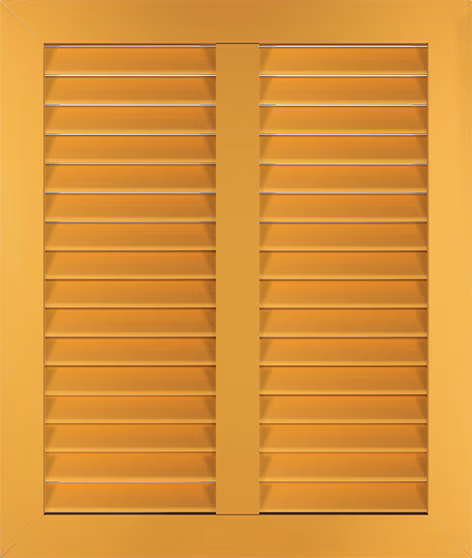
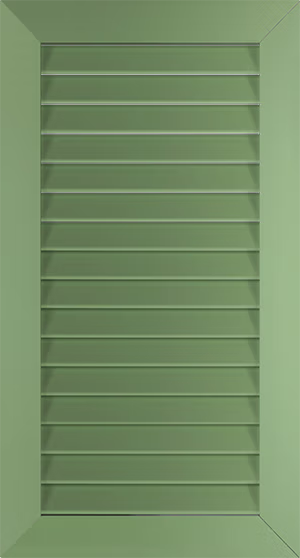
Aluminum Shutter Styles
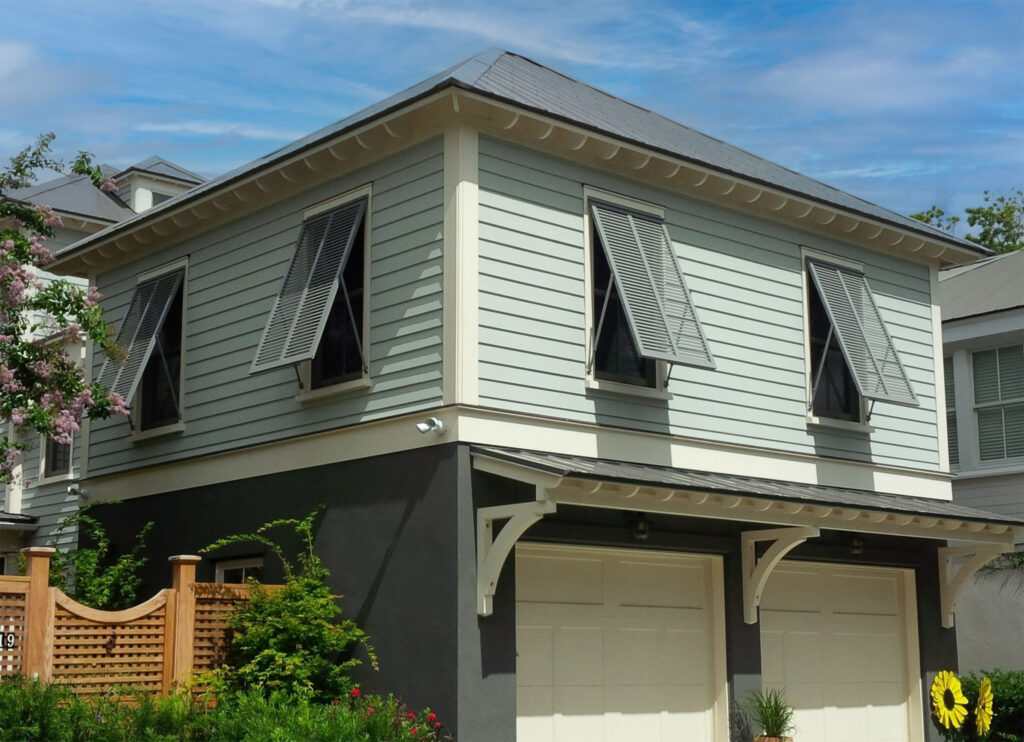
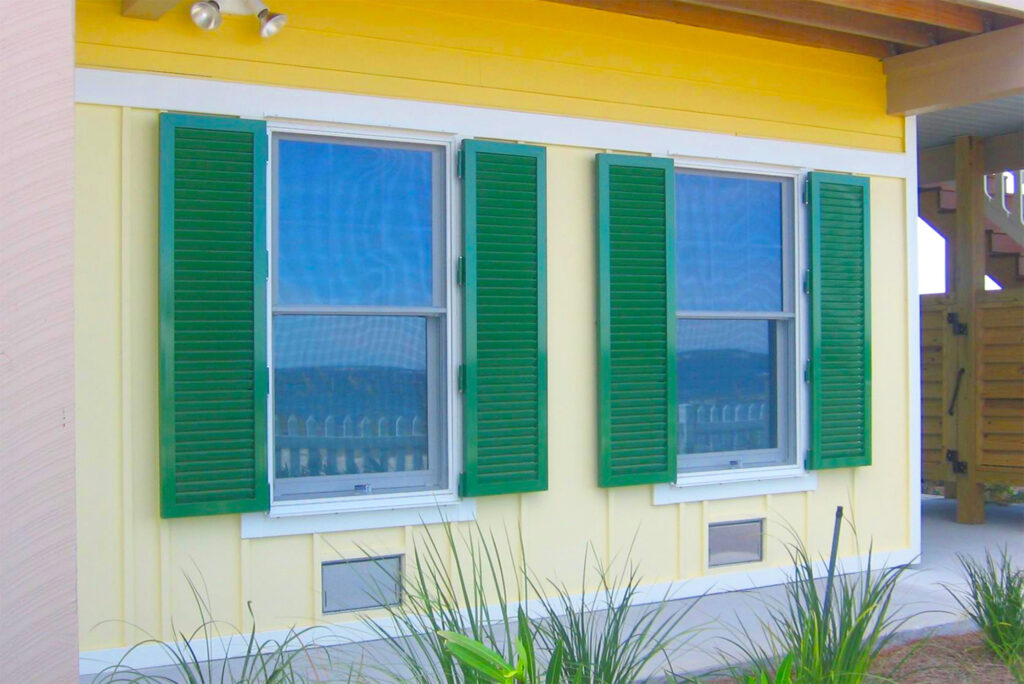
ShutterLand provides homeowners with two distinct styles of premium aluminum shutters: Bahama and Colonial. Both styles use extruded aluminum frames and fixed louvers and are available in hurricane-rated and decorative-only configurations. They differ in design, operation and installation. Aluminum Bahama shutters are hinged at the top, allowing them to extend outward and provide shade, ventilation, and a tropical charm that enhances a home’s exterior. Conversely, aluminum colonial shutters are hinged on the sides, offering a more traditional, symmetrical look reminiscent of classic architectural styles. Both styles combine permanent window protection with an architectural appearance suited to coastal and traditional homes.
| Bahama | Colonial |
| Hinged above the window One shutter typically covers the opening Provides shade when open Hurricane-rated and decorative options | Hinged at the sides One to four panels cover the opening Folds against the wall when open Hurricane-rated and decorative options |
Aluminum Shutter Advantages
+ Hurricane impact-rated configurations available
+ Functional Bahama and Colonial designs
+ Extruded aluminum construction, with reinforced louvers in hurricane-rated configurations
+ Powder-coated finish
+ Custom sizes and colors
+ Low routine maintenance
+ Operating and closure hardware included as specified
Aluminum Shutter Considerations
– Heavier than vinyl, composite or wood shutters
– Higher initial cost than decorative-only alternatives
– Building-attachment fasteners are purchased separately
– Coastal installations require regular cleaning and finish care
How Aluminum Hurricane Shutters Protect Openings
Hurricane-rated aluminum shutters are engineered to protect approved window and door openings from windborne debris and wind pressure. When properly sized, manufactured, and installed according to the applicable engineering drawings, they help reduce the risk of broken glazing and resulting interior damage. Each impact-rated shutter includes the specified closure hardware needed to secure it before a storm. Decorative-only aluminum shutters are not approved for hurricane protection.
Approved configurations comply with the 2023 Florida Building Code, including the High-Velocity Hurricane Zone (HVHZ) provisions applicable to Miami-Dade and Broward Counties. Hurricane testing approval numbers and engineering drawings are shown on product-specific pages. Approval applies only when the shutters are manufactured and installed according to the applicable engineering drawings.
Hurricane Impact and Pressure Test Standards
These test protocols are used to evaluate impact resistance and structural performance for products approved under Florida’s High-Velocity Hurricane Zone requirements.
- TAS 201 – Large Missile Impact Test:
This test evaluates the ability of windows, shutters, and doors to withstand impact from debris propelled during a hurricane. A heavy object, like a 9-pound 2×4 wood plank, is launched at the product at a high speed to simulate real-world storm debris. - TAS 202 – Static-pressure and related performance testing: Evaluates structural performance under uniform air pressure. Depending on the product and applicable requirements, testing may also include air infiltration, water penetration, or forced-entry procedures.
- TAS 203 – Cyclic Pressure Test:
This test subjects the product to repeated pressure cycles to simulate the fluctuating wind forces during a hurricane. It ensures durability and performance after exposure to these stresses.
Florida Building Code and ASTM Test Standards
The Florida Building Code applies throughout Florida. Its High-Velocity Hurricane Zone (HVHZ) provisions establish additional requirements for products used in Miami-Dade and Broward Counties.
- ASTM E1996 – Windborne-Debris Performance Specification: Establishes missile-impact levels, impact locations, pressure cycling and performance requirements for hurricane-resistant windows, doors and impact-protection systems.
- ASTM E1886 – Impact and Cyclic-Pressure Test Method: Tests the complete assembly by subjecting it to specified missile impacts followed by repeated positive and negative pressure cycles.
- ASTM E330/E330M – Uniform Static-Pressure Testing: Evaluates structural performance under uniform static air-pressure differences representing wind loads.
Texas Department of Insurance Product Evaluations
The Texas Department of Insurance publishes product evaluations used for qualifying building products in designated Texas coastal windstorm areas. Impact-protection systems are evaluated for windborne-debris resistance, cyclic pressure and structural performance under the applicable testing and building requirements.
Products evaluated for Texas coastal windstorm applications must bear the required identification label. Depending on the evaluation, the label identifies information such as the manufacturer, product name or model, design-pressure rating and applicable windborne-debris resistance.
| Style | Florida Product Approval | HVHZ status | Texas evaluation |
|---|---|---|---|
| Bahama | FL42399.1-R0 and FL42399.2-R0 | HVHZ approved | TDI-4029 |
| Colonial | FL42400.1-R0 | Outside HVHZ | TDI-4031 |
| Colonial | FL42400.2-R0 | HVHZ approved | TDI-4031 |
Approval applicability, allowable sizes, design pressures, substrates, anchors, and closure methods vary by configuration. Refer to the applicable engineering drawing and local permitting authority.
Construction of Aluminum Shutters
Aluminum shutters are built for high performance in severe weather climates. Construction begins with extruded 6063-T6 aluminum alloy components. Stiles and rails are hollow with 0.04-inch-thick walls. Mitered corners are connected with nylon keys, structural adhesive, and 3/16 inch rivets. Hurricane-rated impact louvers have 0.06-inch-thick walls with internal reinforcing webs that increase impact resistance.
Aluminum Decorative Shutters
Some buildings don’t require the full protection of impact-rated shutters. Decorative-only Colonial and Bahama shutters use similar frame profiles and provide nearly the same installed appearance as the hurricane-rated configurations. The primary difference is that decorative louvers are fully hollow and not reinforced like hurricane shutters. The louver spacing is also slightly different, and the available widths are in 0.5″ increments instead of 0.25″. Decorative shutters can be made with either 1.5″ or 2″ louvers. Decorative aluminum shutters are rigid, weather-resistant, and suitable for everyday functional use or fixed installation, but they are not rated for hurricane protection.
How to Measure for Aluminum Shutters
Measuring for colonial aluminum shutters requires careful attention to detail. ShutterLand provides separate step-by-step instructions and videos for each style.
Aluminum exterior Bahama shutter measuring instructions are different from colonial shutters. These detailed guidelines take the guesswork out of the measuring process, helping you achieve precise dimensions that are crucial for both functionality and aesthetic appeal. By following these instructions closely, you can ensure that your shutters will fit and perform as intended, whether they are purely decorative or designed for hurricane protection.
Aluminum Shutter Installation
ShutterLand provides detailed written and video installation instructions for both Colonial and Bahama aluminum shutters. The procedure for colonial-style aluminum shutter installation secures hinges to the side of the window to swing open for window access. Aluminum Bahama shutter installation uses a long hinge that hangs from the top.
Property owners and installers are responsible for complying with local building requirements. Required clearance from the protected surface, shutter overlap, anchor spacing, fastener type, and mounting substrate vary by shutter style and configuration. Hurricane-rated shutters must be installed according to the applicable Florida Product Approval or Texas evaluation drawing.
Production Time of Aluminum Shutters
The current production time is 8-10 weeks for all styles of outdoor aluminum shutters. The shipping cost for an individual order, regardless of size, is $500.
Are all aluminum shutters hurricane-rated?
No. When ordering, you will need to select either aluminum shutters for “Hurricane Protection” or “Decorative Only”.
Are all aluminum shutters installed with hinges?
No. Aluminum colonial shutters may be installed with fixed brackets – specified at the time of order.
What is the difference between colonial and Bahama shutters?
Colonial shutters hinge to the side of, and cover, a window with 1, 2, 3, or 4 panels across. Bahama shutters utilize a top hinge, which suspends them over the window. Individual panels can be made wider than standard colonial shutters with vertical sub-stiles that separate and create multiple horizontal louver areas.
How should aluminum shutters be maintained near salt water?
Clean the powder-coated finish of aluminum shutters periodically with mild soap and water, rinse coastal installations more often to remove salt, avoid harsh or abrasive cleaners, and regularly inspect the hardware for secure, smooth operation.