Written by ShutterLand, a U.S. exterior shutter specialist with over two decades of hands-on experience in shutter measurement, material selection, finish options, and installation for residential homes and commercial properties.
Hurricane shutters help protect windows and doors from strong winds and flying debris during severe storms. The best option depends on the style of the home, the level of protection needed, the budget, and how easily the shutters can be closed when a storm approaches. Because not all exterior shutters are designed for hurricane protection, it is important to choose a tested and approved system when storm protection is the goal.
There is no single best hurricane shutter for every property. Removable panels are often selected for affordability, accordion and roll-down systems for quick deployment, and impact-rated aluminum Bahama or Colonial shutters for homeowners who want permanent protection combined with architectural appearance and everyday operation.
Type
Best suited for
Deployment
Storage
Relative cost
Appearance
Emergency plywood
Last-resort preparation
Slow
Required
Lowest
Temporary
Approved storm panels
Budget-focused protection
Moderate
Required
Low–moderate
Removed after storms
Fabric panels
Lightweight removable coverage
Moderate
Required
Moderate
Removed after storms
Accordion
Fast manual deployment
Fast
None
Moderate
Visible beside opening
Roll-down
Convenience and large openings
Very fast
None
Highest
Housing above opening
Aluminum Colonial
Traditional permanent shutters
Fast
None
Higher
Traditional
Aluminum Bahama
Permanent protection and shade
Fast
None
Higher
Coastal/ tropical
Impact windows
Always-active glazing protection
None
None
Highest
Minimal exterior change
ShutterLand specializes in custom aluminum Bahama and Colonial shutters available in hurricane impact-rated and decorative-only configurations. Other systems are included in this guide to help homeowners compare the primary forms of hurricane opening protection.
Hurricane Season
The Atlantic hurricane season officially runs from June 1 through November 30. The peak season occurs between August and October, with mid-September as the pinnacle, so permanent protection should be selected and installed well before a storm approaches.
Hurricane shutters are commonly used along the Atlantic and Gulf coasts, particularly in Florida, Texas, Louisiana, the Carolinas, and other regions exposed to tropical storms.
Tropical cyclones are classified by sustained wind speed.
Tropical Depression: A tropical cyclone with sustained winds of 38 mph or less Tropical Storm: Strong thunderstorms with wind speeds between 39 & 73 mph.
Category
Sustained Wind Speed
Category 1
74–95 miles per hour
Category 2
96–110 miles per hour
Category 3
111–129 miles per hour
Category 4
130–156 miles per hour
Category 5
157 miles per hour or higher
Why Install Hurricane Shutters
In recent years, hurricanes and tropical storms have displayed their fierce, destructive potential. Family members, pets, and small valuables are often evacuated to regions outside of danger. Houses, businesses, and other properties must be strong enough to endure the storm, and weatherproof shutters can help accomplish that task.
Hurricane shutters covering windows and doors are a first line of defense between the outside elements and indoor contents. A broken window can allow wind, rain, and debris to enter the building. This also may result in intense pressure on the roof and interior walls. A collapse will expose all contents and lives inside the house to a tropical storm or hurricane. Exterior hurricane shutters are a key factor in reducing the risk of excessive damage.
Hurricane Warning
No longer used by the U.S. National Weather Service, hurricane flags still may be displayed by the U.S. Coast Guard to warn of an approaching storm. A single hurricane flag indicates a storm with wind speeds between 55 and 73 mph. Two flags indicate a hurricane warning with wind speeds in excess of 74 mph.
Types and Designs of Hurricane Shutters and Storm Panels
The best hurricane shutters are installed well in advance of hurricane season. Some hurricane shutters permanently attach to the window, while others are attached to preinstalled anchors or tracks when a warning is issued.
Storm Panels
Storm panels are solid coverings installed over windows and doors before a hurricane or tropical storm and removed when the danger has passed. They generally fall into two categories: emergency panels made from common construction materials and approved removable storm-panel systems designed and tested specifically for windborne-debris protection.
Emergency Storm Panels
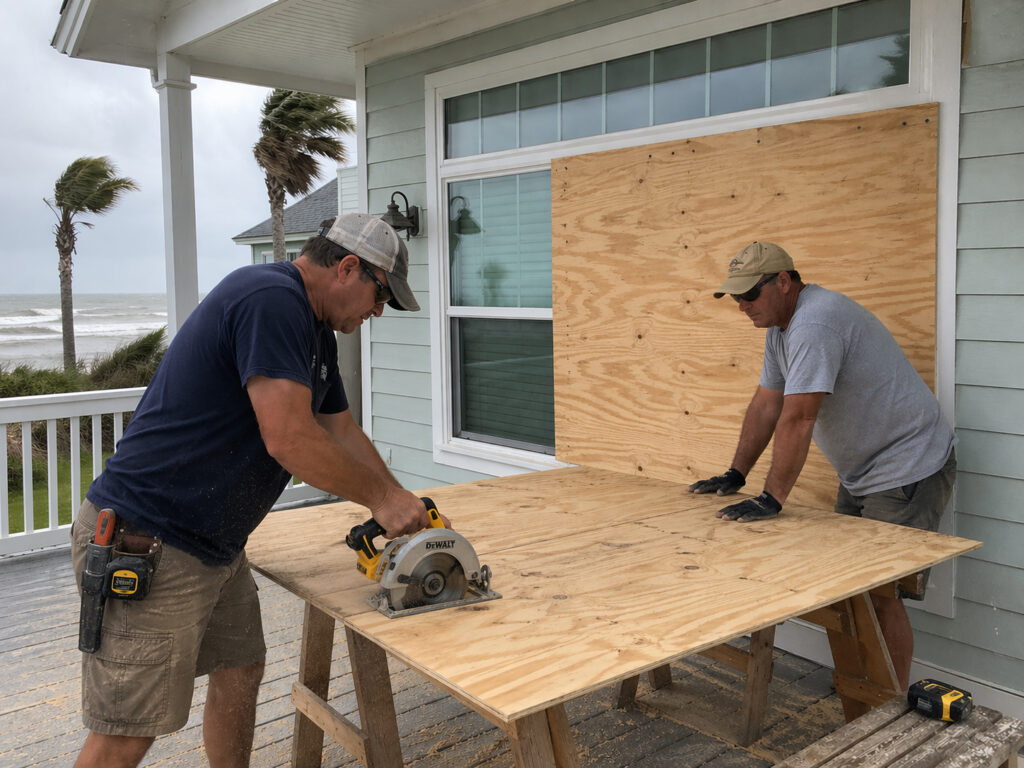
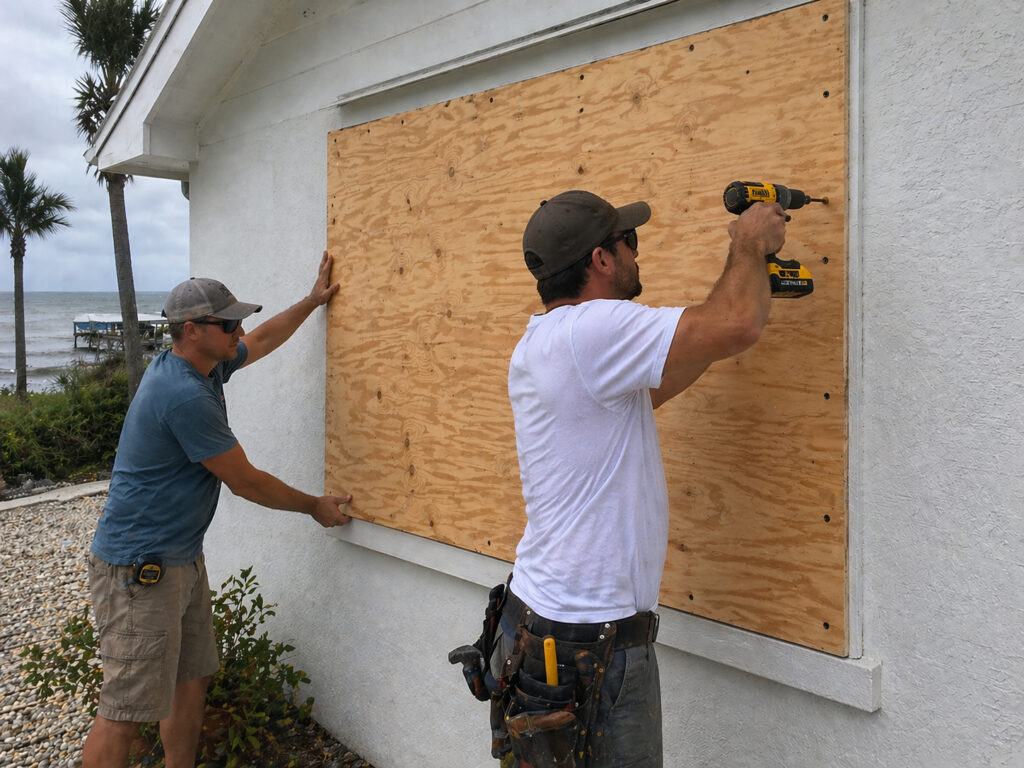
Emergency storm panels are inexpensive, temporary coverings made from readily available construction materials. Plywood is the most common choice because it is affordable and relatively easy to cut for individual windows. Recessed openings may allow plywood panels to fit within the window opening, while other installations require the panels to overlap the surrounding wall.
Each panel should be cut, fitted and labeled for a specific opening well before a storm approaches. Adding handles can make large panels easier to carry and position. Panels must also be stored in a dry, accessible location between storms. Unfinished plywood can absorb moisture, warp and deteriorate, which may limit its ability to be reused.
Corrugated aluminum, galvanized steel and polycarbonate sheets are sometimes adapted for emergency storm protection. However, general-purpose roofing or agricultural panels are not necessarily tested or approved as hurricane-protection products. Metal sheets can also be difficult to cut and transport safely because of their sharp edges and corners.
Emergency panels should not be treated as equivalent to tested hurricane shutters. Materials and installation methods that have not been evaluated as a complete system may offer limited protection and may not satisfy local building-code or insurance requirements.
Waiting until a storm is approaching can make preparation much more difficult. Plywood, fasteners and other supplies often sell out quickly at lumberyards and home-improvement stores, leaving last-minute shoppers with long lines and limited options.
Approved Removable Storm Panels
Approved removable storm panels are purpose-built hurricane-protection systems made from materials such as corrugated aluminum, galvanized steel or transparent polycarbonate. Unlike improvised emergency coverings, these systems are tested as a complete assembly that includes the panels, tracks, anchors, fasteners and required installation spacing.
The panels are typically secured directly to approved anchors or installed within permanent tracks mounted above and below the opening. When severe weather threatens, the numbered panels are placed into position and fastened according to the manufacturer’s installation instructions. After the storm, they can be removed and stored until needed again.
Approved storm panels provide a more dependable and repeatable installation than panels made from general construction materials. However, approval applies only when the specified panel type, hardware, mounting surface and installation method are used together. Homeowners should verify that the system is approved for their location, opening size, building type and applicable wind or windborne-debris requirements.
Accordion Hurricane Shutters
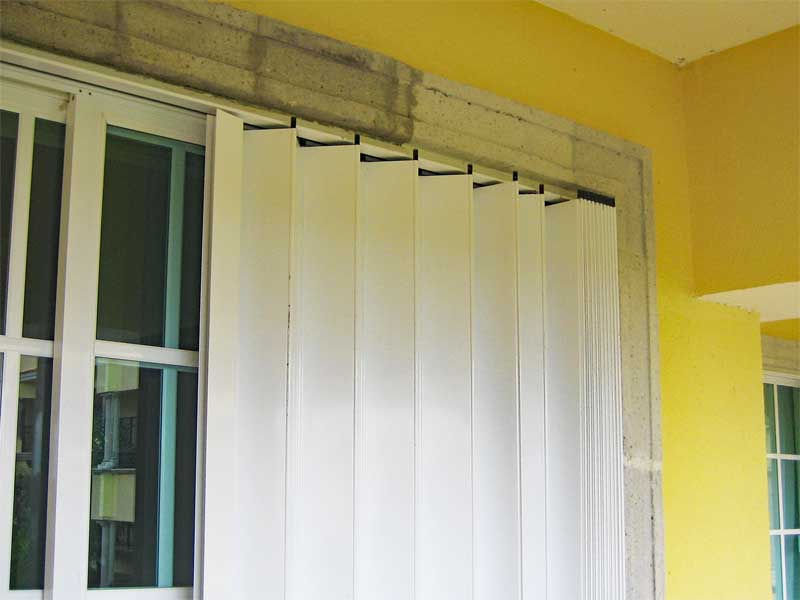
Accordion hurricane shutters are permanently mounted beside a window or door and fold compactly to one or both sides when not in use. When a storm approaches, the shutters slide along a track, extend across the opening and lock together at the center or opposite side. Their permanently installed design makes them faster and easier to deploy than removable storm panels.
The shutter consists of narrow vertical blades connected in an alternating, V-shaped pattern. A top track supports the assembly as it moves across the opening, while a lower track or guide helps secure it in place. Accordion shutters are generally used on rectangular windows, doors, balconies and other large openings. Available sizes vary by manufacturer and the engineering requirements of the installation.
Most accordion hurricane shutters are constructed from aluminum, although some systems incorporate translucent polycarbonate components. Certain models can also be locked when closed, providing an additional measure of security when the property is vacant.
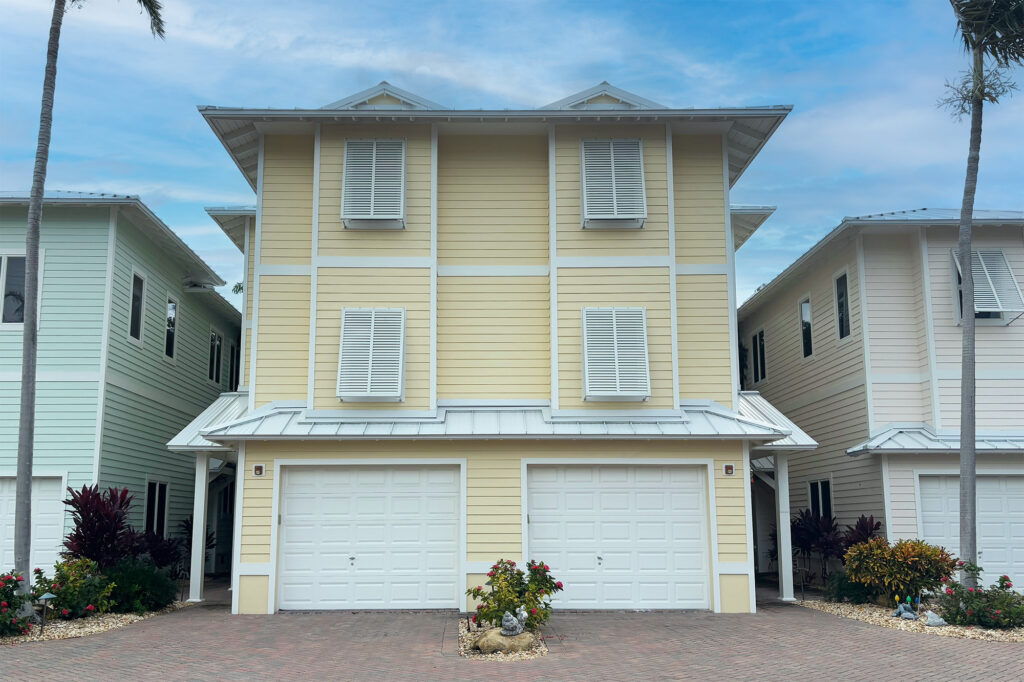
Colonial Hurricane Shutters
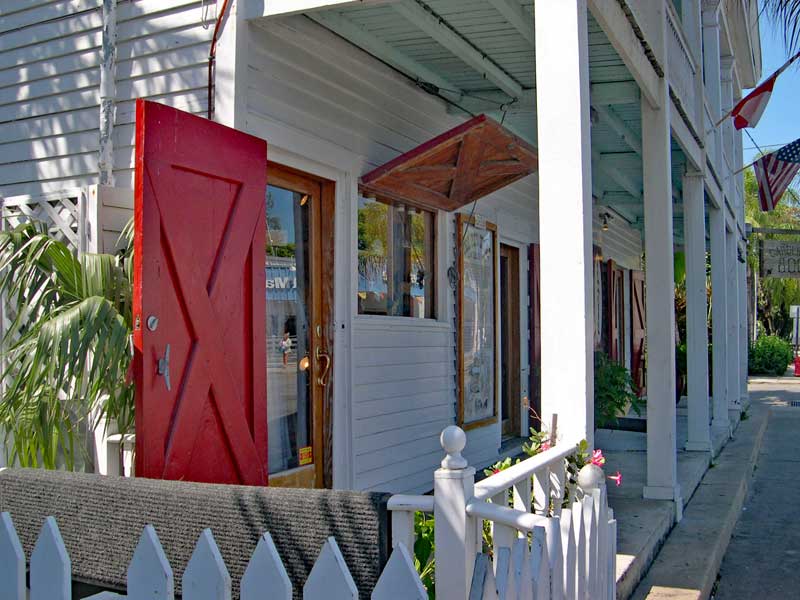
Colonial shutters hinge at the sides of a window and swing closed over the opening. While functional colonial shutters can be manufactured from several materials and in multiple styles, only shutters tested and approved as a complete impact-protection system should be relied upon for code-required hurricane protection. Hurricane-rated colonial shutters are manufactured from reinforced aluminum and must be sized and installed according to the applicable engineering drawings. Wood and PVC colonial shutters are intended for functional exterior use but are not designated as impact-rated hurricane protection.
Certified exterior hurricane colonial aluminum shutters provide tested opening protection in approved configurations. They endure a rigorous testing process to ensure they will withstand hurricane-force winds and impact from airborne missiles.
Exterior wood shutters and PVC shutters are built for functional exterior use and harsh weather, but ShutterLand does not designate them as impact-rated hurricane protection. Only shutters with applicable testing, approval documentation and approved installation configurations should be relied upon for code-required opening protection.
Bahama Hurricane Shutters
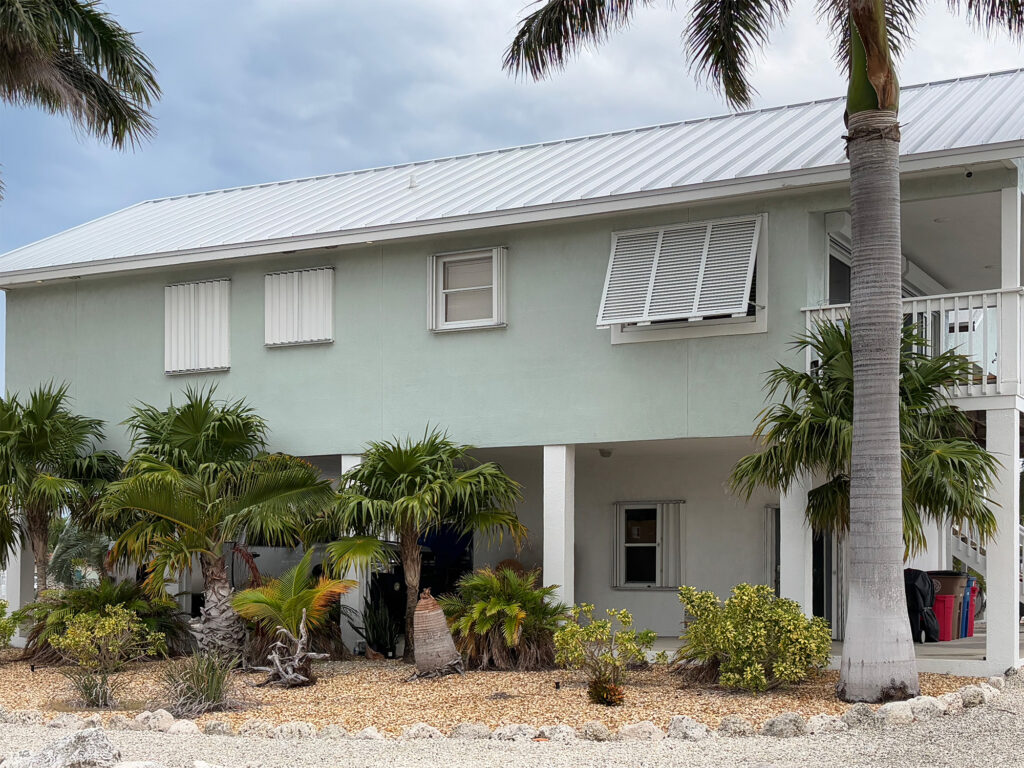
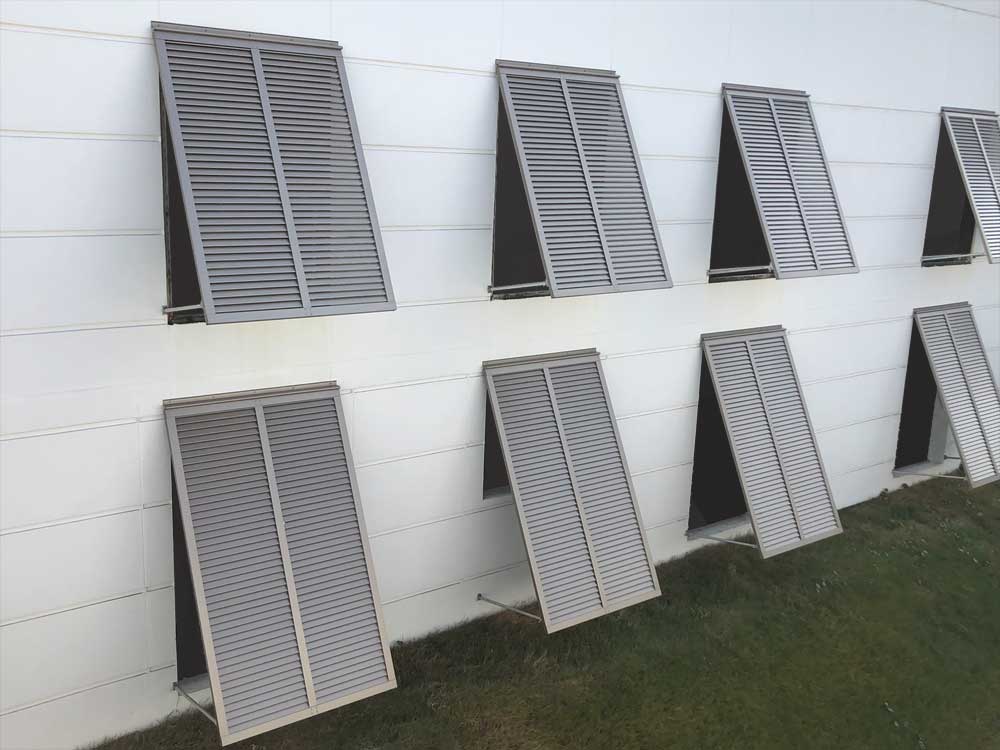
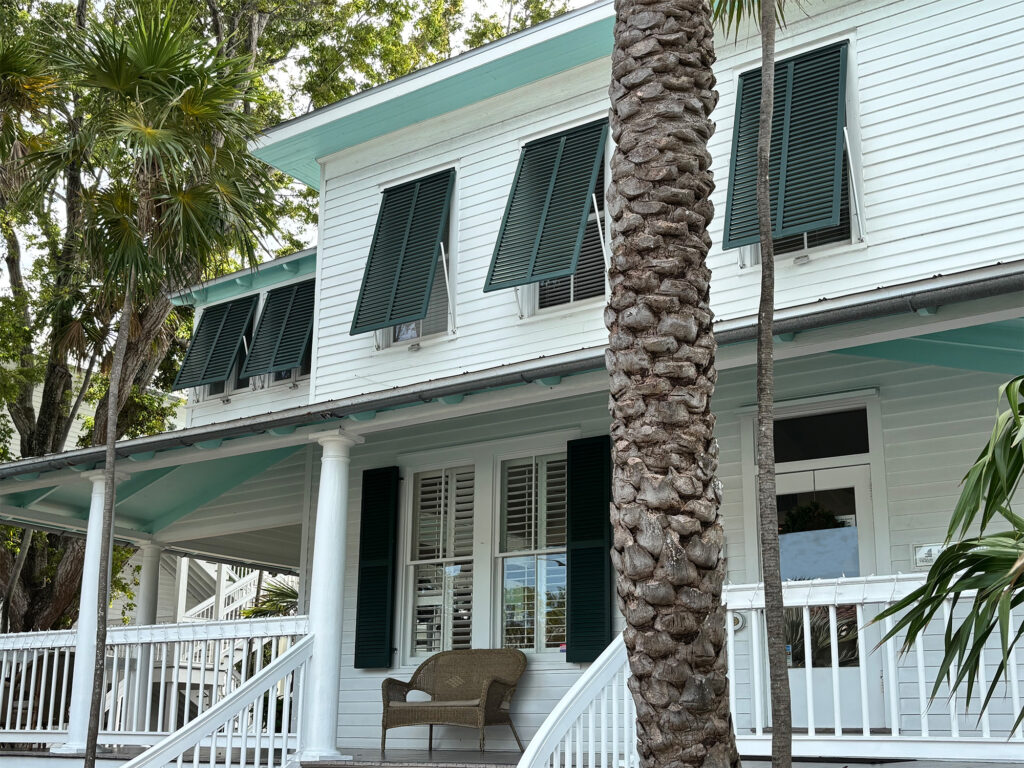
Bahama shutters are manufactured in several materials, but only tested and approved hurricane-rated configurations should be relied upon for opening protection. They are configured to cover the entire window width, often incorporating a vertical sub-stile. Bahama shutters hinge at the top of the window and prop open at the bottom. Horizontal louvers allow for light and visibility when open. Many shutters along the Florida coast are often constructed in this style.
Impact-rated aluminum Bahama shutters incorporate reinforced louvers and approved closure hardware to help protect windows from windborne debris and wind pressure. Decorative aluminum, wood and PVC Bahama shutters are not designated as hurricane protection.
Aluminum Bahama shutters meet all of the requirements for an effective hurricane exterior shutter. They are constructed with reinforced louvers to withstand impact from pounding winds and flying debris. Measuring for aluminum Bahama shutters is a technical process, so proper instruction is essential to overall success.
Rolling or Roll-Down Hurricane Shutters
Roll-down shutters are installed above the window and are enclosed in a compartment when not in use. When needed, the roll-down hurricane shutters lower in front of the opening to create a flat barricade over the window, like a garage door. Rolling hurricane shutters can operate manually or automatically when wired. Roll-down shutters are more involved to mount than other options and likely should be professionally installed. Metal or polycarbonate shutters give excellent protection and can be deployed for security as well.
Fabric Storm Panels
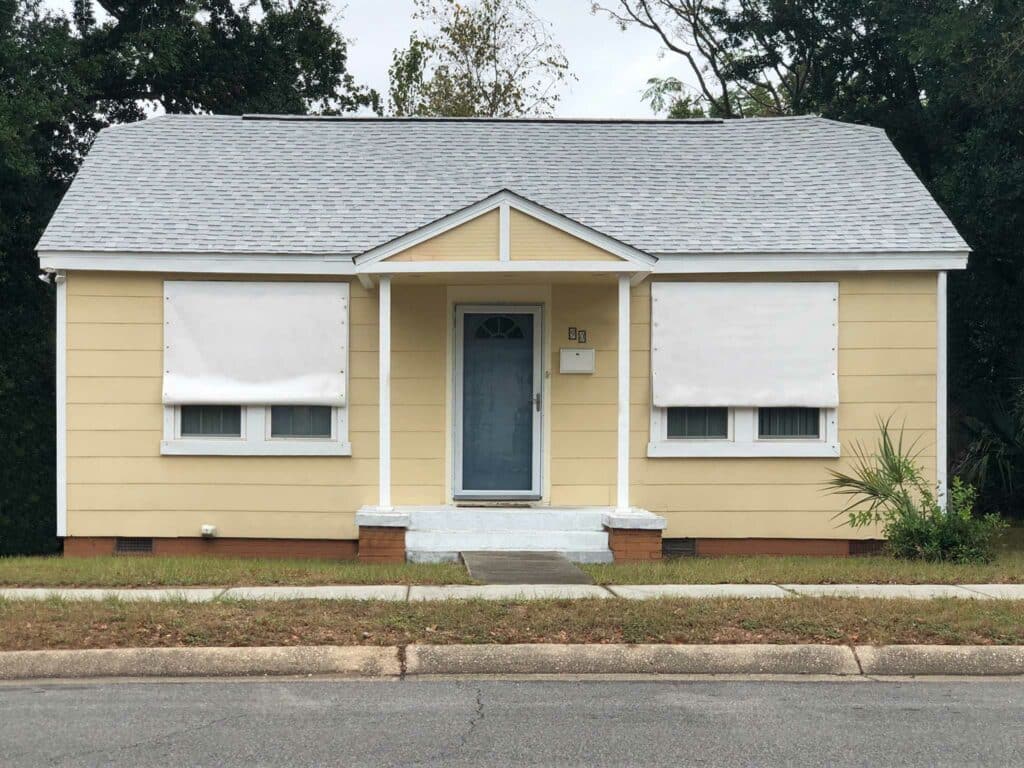
Approved high-tech fabric storm panels provide lightweight, removable opening protection and can often cover windows, doors and other large openings. Allowable panel dimensions, anchor spacing, mounting substrates, impact ratings and design pressures vary by manufacturer and tested configuration. Fabric panels must be installed according to the applicable product approval or evaluation report. They can be easily rolled up and stored until they need to be called into service.
Hurricane Glass Impact Windows
Approved impact-resistant windows and doors can eliminate the need for additional fortification. This costly home improvement replaces standard windows and doors with assemblies engineered for the building, location and required design pressure. Because they are always in place, impact-resistant windows can save valuable time and effort when preparing for heavy rain, high winds and an approaching hurricane.
Hurricane Shutter Building Codes
Building-code requirements for hurricane protection vary by location and the potential threat from high winds and windborne debris. Local and state regulations are generally based on standards established by the International Building Code (IBC), the International Residential Code (IRC), and ASTM E1886 and ASTM E1996. Manufacturers of shutters, storm panels, impact-resistant windows, and doors should be able to provide documentation showing that their products have been tested and approved for the intended application.
The term “impact resistant” applies to products that have been tested to withstand windborne debris. Large-missile testing commonly involves a 9-pound 2×4 striking the product at a specified speed, followed by repeated pressure testing to simulate hurricane-force winds. The Florida Building Code includes additional requirements for the High-Velocity Hurricane Zone, which covers Miami-Dade and Broward Counties. Florida Product Approvals, Miami-Dade Notices of Acceptance, and Texas Department of Insurance product evaluations may be used to document compliance, depending on the project location.
Local permitting officials ultimately determine which approvals, design pressures, installation methods, and supporting documents are required for an individual home or building. An inspection may also help determine the condition and integrity of existing hurricane shutters. A qualified inspector or engineer can evaluate the structure, identify weak or potentially unsafe areas, and recommend improvements before a hurricane threatens the property.
Shop for Hurricane Shutters – Where to Buy
Hurricane shutters can be purchased through local contractors, specialty shutter dealers, manufacturers, and online retailers. Local companies may offer on-site measuring and installation, while online retailers can provide a wider selection of styles, sizes, colors, and lower prices. When comparing sellers, look for clear product-approval information, detailed measuring guidance, installation documents, warranty coverage, and knowledgeable customer support. For custom shutters, it is especially important to confirm that the product is appropriate for the opening size, building location, and local code requirements before ordering.
Hurricane Shutter Installation
Some hurricane-protection systems are suitable for experienced homeowners, while others require professional installation. Installation complexity depends on the shutter type, opening size, mounting substrate, access and local permitting requirements. All hurricane-rated products must be installed according to the applicable approval drawings and building requirements.
For a permanent exterior shutter that remains part of the home throughout the year, ShutterLand’s impact-rated aluminum Bahama shutters and Colonial aluminum shutters provide a strong combination of tested opening protection, functional operation and custom architectural styling.
What do Exterior Hurricane Shutters Cost?
Hurricane-shutter cost is influenced by the type of system, opening dimensions, material, design-pressure requirements, mounting substrate, operating method and installation access. Emergency plywood generally has the lowest initial cost but requires preparation, deployment and storage. Approved removable panels are often among the most economical tested systems. Accordion shutters provide permanent mounting and faster deployment, while aluminum Bahama and Colonial shutters combine permanent protection with architectural styling. Manual and motorized roll-down shutters are generally among the more expensive options. Price alone does not determine protection; the selected product must be approved and properly installed for the specific application.