
How to Measure for Exterior Shutters
Exterior shutters are measured differently depending on whether they will remain fixed beside the window or close over it. Begin by selecting the shutter style and material, then determine whether the installation will be fixed or functional.
Wood, PVC, and aluminum shutters can be made for functional installation. Composite and vinyl shutters are fixed decorative shutters and are not designed to swing open or provide storm protection. Aluminum shutters may be decorative fixed panels or functional hurricane-rated shutters, depending on the product selected.
Colonial Shutters


Bahama Shutters


Fixed or Functional Shutters?
Fixed shutters are permanently mounted beside the window. They do not close over the opening, so the measurements can be adjusted to create balanced proportions around the window.
Functional shutters are sized to close over the window when needed. Because the panels must fit the opening and operate correctly, functional shutters require more precise measurements, including the window dimensions, available depth, clearance, and hinge location.
Decorative shutters may use functional-style hardware for appearance, but the shutters remain fixed and are not intended to operate.
Measuring Fixed Exterior Shutters
Fixed shutters should generally appear as though they could fully cover the window when closed. For that reason, each shutter should usually measure approximately half the width of the window.
If the window is too wide or available wall space is limited, narrower shutters may create a better appearance. Very wide windows may require shutters that are approximately one-third or one-fourth of the window width to suggest multiple panels covering the opening.
The height may align with the window opening or the outside of the window casing, depending on the proportions that best suit the house.
Material-specific size limitations and configuration options are explained in the individual measuring instructions below.
Measuring Functional Colonial Shutters
Colonial shutters are installed beside the window and typically swing open and closed from the sides. For most functional wood and PVC shutters, each panel is sized to cover approximately one-half of the window opening.
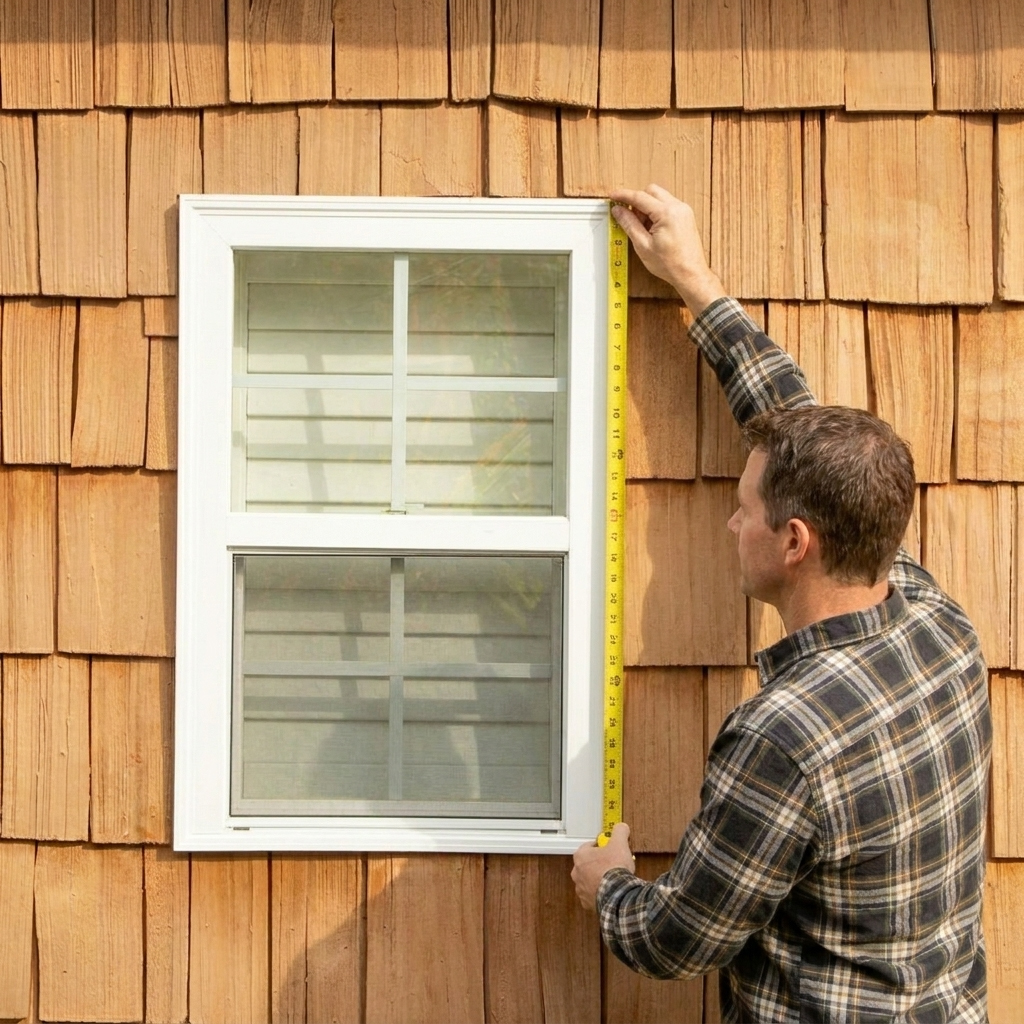
Before ordering, measure the window opening, check the available depth, identify the mounting surface, and determine where the hinges will be installed. Windows that appear identical may have slightly different dimensions, so each opening should be measured separately.
Functional Colonial aluminum shutters are measured differently from most wood and PVC shutters. They are ordered as complete units rather than as separate individual panels, so the entire window width and height must be measured.
Colonial Shutter Measuring Instructions
Select the material and installation type below for detailed instructions:
- Measure for Wood Exterior Shutters
- Measure for PVC Exterior Shutters
- Measure for Colonial Aluminum Shutters
- Measure for Fixed Composite Shutters
- Measure for Fixed Vinyl Shutters
Measuring Bahama Shutters
Bahama shutters are mounted above the window with a continuous top hinge. Unlike Colonial shutters, which are installed at the sides of the opening, a Bahama shutter is usually built as one panel that lifts outward from the bottom.
Measure the full window width and height, then check the area above the window for the required hinge mounting surface. Also look for trees, roof lines, posts, or other obstructions that could interfere with the shutter or its support arms.
Wood and PVC Bahama shutters use different hinge and clearance options from aluminum Bahama shutters. Follow the instructions for the selected material.
Bahama Shutter Measuring Instructions
Tools for Measuring
A steel tape measure, pencil, paper, and sturdy ladder are recommended. An assistant can make it easier to measure large or elevated windows safely.
Measure every window individually rather than assuming that openings that appear similar are exactly the same size.
After measuring, review the exterior shutter installation instructions for the selected material and installation method.
